For most homes, yes, solar works, and the single biggest factor is which way your main roof planes face. In the northern hemisphere a south-facing roof at an azimuth near 180 degrees produces the most, while east and west planes still work and give up some output (DOE). The thing that can quietly sink a good roof is shade during the middle of the day, which cuts production out of proportion to how small the shadow looks (DOE). Roof age and material matter too, but they are a timing question, not usually a yes-or-no one.
Key takeaways
- Direction drives everything: a south-facing plane near 180 degrees azimuth produces most in the northern hemisphere, with east and west giving up some output (DOE).
- Shade during peak midday hours hurts far more than its size suggests, so one tree in the wrong spot matters more than a big roof.
- Production is a product of tilt, azimuth, shading, temperature, and soiling together, not any one of them alone (DOE).
- Roof age is a timing decision: if the roof is near the end of its life, re-roof first so you never pay to remove panels later.
- A designer can estimate your roof's output from satellite imagery and modeling before anyone sets foot on a ladder (DOE).
- Start by walking your own roof
- Which way your roof faces, and why south wins
- Tilt: the angle your panels sit at
- Reading shade across a day and across seasons
- Usable area after fire setbacks and obstructions
- Roof age, material, and the re-roof question
- How a designer estimates production without climbing up
- The roof factors that move production, side by side
- Is my roof solar-ready? A walk-through checklist
- Roof-fit mistakes that trip up homeowners
- Seeing your roof's numbers before the quotes
Before you fill out a single quote form, go outside and look up. Most of the questions that decide whether solar fits your house are answered on your own roof, and you can read a surprising amount of it standing in the yard with a phone compass. Which way do the big roof planes point? Where does the chimney throw its shadow at two in the afternoon? How old is the shingle up there, and is that one maple going to be a problem in July? None of this requires a technician yet. It just requires knowing what to look at. This walk-through covers the five things that actually decide roof fit, what each one does to production, and how a designer checks the same things from a desk before anyone shows up with a ladder.
Start by walking your own roof
The reason to do this first is that it saves you from the two worst outcomes: paying for a site visit on a roof that was never going to work, or signing for a system that underperforms because nobody flagged the shade. A homeowner who can describe their own roof walks into quotes with real questions instead of a sales pitch they cannot judge.
You are looking for five things, and they stack. Direction and tilt set the ceiling on how much sun your roof can catch. Shade decides how much of that ceiling you actually reach. Usable area, after the code-required gaps, sets how many panels fit. Roof condition decides the timing. The Department of Energy frames a home's actual output as the combined result of the sunlight reaching the panels, their tilt and orientation, temperature, soiling, and shading, so no single number tells the whole story (DOE). Think of your walk as collecting those inputs one at a time.
Bring a phone with a compass app and, if you have one, a photo of the roof from the street. You do not need to get on the roof. Most of what matters is visible from the ground, and the rest a designer will pull from imagery. The goal is a rough mental map: where the planes point, where the shadows fall, and whether the shingles have a lot of life left.
Which way your roof faces, and why south wins
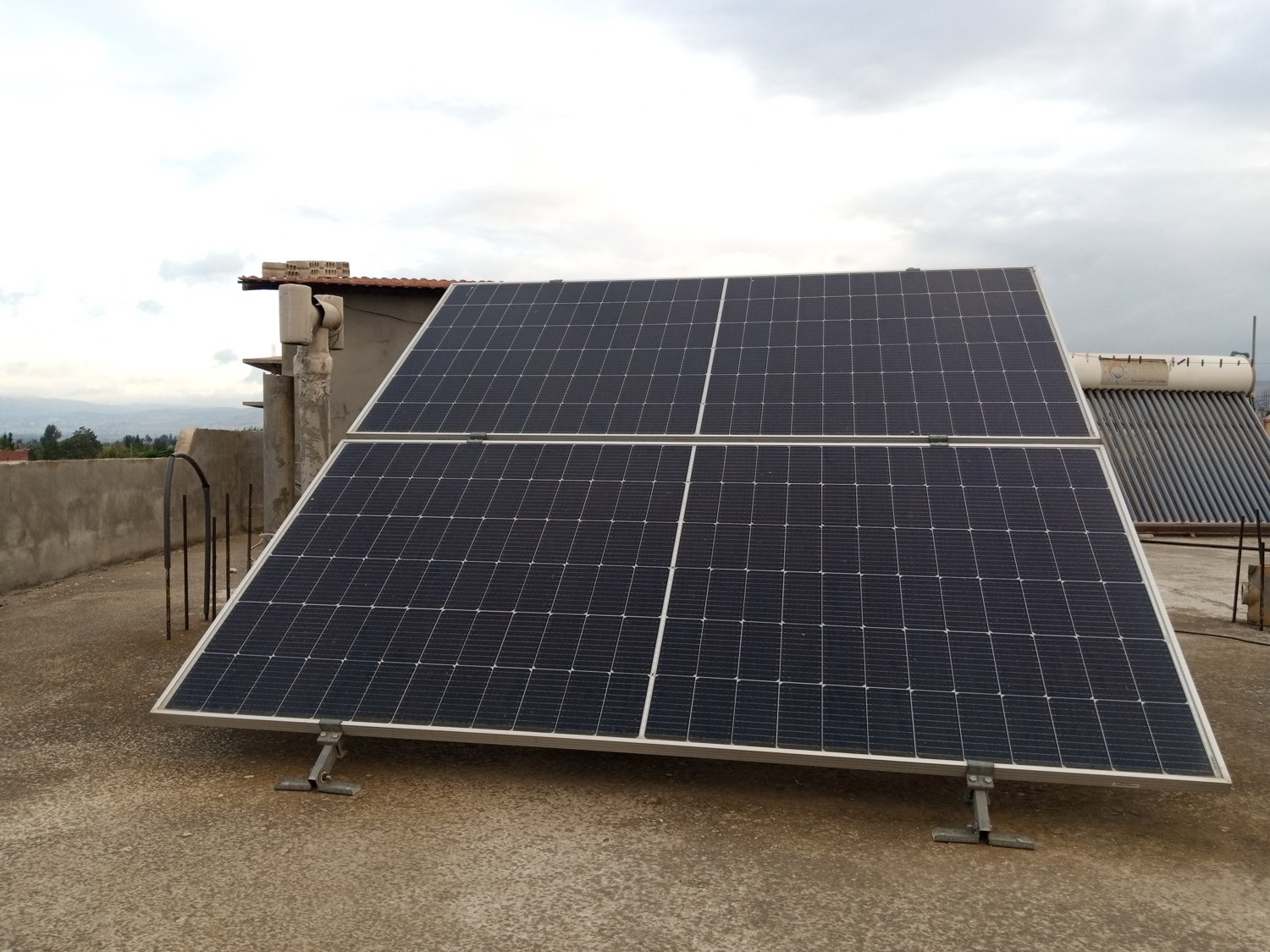
Orientation is the first thing and the biggest. Solar engineers call it azimuth, the compass direction a roof plane points. In the northern hemisphere the sun tracks across the southern sky, so a roof face aimed due south, an azimuth near 180 degrees, catches the most sun across the day and produces the most energy over a year (DOE). That is the benchmark every other direction is measured against.
South winning does not mean every other direction loses. East-facing and west-facing roofs still make solar well, they just give up some annual output compared with a south plane, because they catch strong sun for half the day rather than straddling noon (DOE). An east roof does its best work in the morning, a west roof in the late afternoon. For a household that uses a lot of power after work, or pays more for evening electricity, a west-facing array can line up better with when you actually need the energy than a strict output-maximizing south roof would.
North-facing planes are the weak ones in the northern hemisphere, and designers usually skip them unless there is no other option. Here is the practical part: almost no roof is a single plane. You likely have two or more faces pointing different ways, and the design will favor the south, east, and west sections and leave the north slope bare. Stand in the street, open the compass, and note which way your largest, least-shaded faces point. That one observation tells you more about your solar potential than any other.
Tilt: the angle your panels sit at
Tilt is the second half of orientation, the angle a roof plane rises from flat. On a pitched roof the panels sit flush with the shingles, so the roof pitch becomes the panel tilt. It works alongside azimuth to set how directly sunlight strikes the glass through the seasons, and it is one of the inputs the DOE lists as shaping real output (DOE).
The short version is that a moderate tilt, somewhere in the range of a typical residential roof pitch, works well across most of the country, and the exact angle matters less than people expect. A steeper roof favors winter sun that sits low in the sky. A shallower roof favors summer sun that climbs high. Across a full year the two tend to even out, so a reasonable pitch in almost any direction but north will produce respectably. You are not stuck if your roof is not at some textbook perfect angle.
Two tilt situations are worth a note. A nearly flat roof, common on modern and some ranch-style homes, can still take solar, usually with the panels set on tilted racking so they are not lying dead level and collecting dirt. A very steep roof produces fine but is harder and costlier to work on, which can show up in the install price rather than the production number. For your walk, you do not need to measure the angle. Just notice whether the roof is close to flat, moderately pitched, or steep, and let the designer put a number on it.
Reading shade across a day and across seasons
Shade is where good roofs go wrong, and it is the factor homeowners most often underestimate. A panel in shadow does not just lose its own slice of sun. Because of how panels are wired together, shade falling on part of an array during the hours of strongest sun can drag down production out of all proportion to the size of the shadow (DOE). A single branch crossing the array at noon is a bigger problem than a wide shadow at dawn.
So the hours that count are the middle of the day, roughly mid-morning to mid-afternoon, when the sun is highest and the panels are doing most of their work. Shade before and after that window costs far less. When you walk the roof, track your usual suspects through those peak hours: tall trees to the south, a chimney, a dormer, a plumbing vent, a neighbor's two-story wall, a rooftop unit. Note not just whether they cast shade but when and onto which plane.
Seasons move the shadows too. The sun rides high in summer and low in winter, so a tree that clears the roof in July can blanket it in December, and a shadow is longest in the months the sun sits lowest. The deciduous tree that is bare and harmless in winter fills in with leaves by summer. A real shade read has to account for the whole year, not the one afternoon you happened to look. This is exactly the kind of thing a modeling tool handles well, because it can simulate the sun's path across every month at once instead of relying on a single glance.
Usable area after fire setbacks and obstructions
A big roof is not the same as a big usable roof. Before you count how many panels fit, you have to subtract the parts you are not allowed to cover and the parts that are already taken. Fire codes in many areas require clear pathways and setbacks around the edges and ridge of a roof so firefighters have somewhere to stand and vent, and those margins come straight off your available space. The specifics vary by local code, so treat this as a real constraint a designer will apply to your plan, not a flat number you can assume (DOE).
Then subtract the obstructions. Plumbing vents, the chimney, skylights, attic fans, satellite dishes, and existing rooftop equipment all break up the clean rectangles a designer wants to fill with panels. A roof that looks huge from the street can shrink fast once you draw in the setbacks and route around every pipe. The leftover area, the clear planes facing the right directions, is your real canvas.
This is why two houses with identical-looking roofs can support very different system sizes. One has a clean south face, the other has the same face chopped up by a dormer and three vents. For your walk, just count the obstructions on each good plane and notice how the clear space is broken up. You are not doing the layout. You are getting a feel for whether the usable area is one big field or a handful of small patches, which a designer will turn into an exact panel count.
Roof age, material, and the re-roof question
Here is the factor that is almost never a flat no, just a question of timing. Solar panels are built to produce for decades, so you want the roof under them to have a comparable amount of life left. The guidance homeowners get is to handle roof repairs or a full replacement before the panels go on, because a roof near the end of its life is the one place where waiting costs you (DOE).
The reason is simple math on labor. If your shingles have five years left and the panels have 25, you will eventually pay a crew to remove the whole array, re-roof, and reinstall it, a cost you could have avoided by re-roofing first. So the honest question is not whether your roof can hold solar. It is how many years are left on the current roof. A newer roof in good shape is ready now. A roof near end of life is a re-roof-first project, and the solar waits a few months for the new surface.
Material affects the install more than the yes-or-no. Asphalt shingle, the most common residential surface, is straightforward to mount on. Standing-seam metal is friendly to solar because panels can often clamp to the seams. Tile and slate can be done but ask for more care and specialized mounting, which tends to show in the price. For your walk, find out roughly how old the roof is and what it is made of. If a re-roof is coming anyway, folding it into the solar project is cheaper than doing it twice.
How a designer estimates production without climbing up
You might assume a real estimate requires someone up on the roof with instruments. For the first pass, it does not. Modern solar design starts from overhead imagery and modeling. A designer pulls satellite and aerial pictures of your roof, traces the planes, reads their direction and pitch, drops in the obstructions, and runs the sun's path across the whole year to estimate how much energy the roof will make, all before anyone drives out (DOE). The physical site visit confirms the details and checks the electrical setup, but the production number comes from the model first.
That model is only trustworthy because it accounts for the same five things you just walked. It takes orientation and tilt from the roof geometry, simulates shade from trees and structures across the seasons, applies the usable area after setbacks, and factors in the conditions the DOE names as shaping real output.
A solar system's real-world electricity production depends on how much sunlight reaches the panels along with their tilt and orientation, temperature, soiling, and shading, which is why a design has to model those conditions rather than assume ideal ones.
Paraphrased from the U.S. Department of Energy, Solar Performance and Efficiency
What this means for you is that you can get a credible read on your roof without committing to anything. When a proposal lands, you can check it against your own walk. Does the shade estimate match the tree you were worried about? Did they catch the dormer? A production figure that lines up with what you saw on the ground is one you can trust. One that ignores an obstruction you know is there is a flag to push on.
The roof factors that move production, side by side
Put the five factors together and it is easier to see which ones set the ceiling and which ones you can manage. The effects below are directional, drawn from how the DOE describes what shapes output, not exact loss figures, since the real numbers depend on your specific roof and climate (DOE).
| Roof factor | Effect on production | What to do about it |
|---|---|---|
| Azimuth (direction) | South near 180 degrees produces most, east and west give up some, north is weak | Design for the south, east, and west planes and leave north bare |
| Tilt (pitch) | Moderate pitches work well across seasons, and the exact angle matters less than people expect | Let the designer read pitch from geometry, and flat roofs can use tilted racking |
| Midday shade | Hurts far more than the shadow's size, because of how panels are wired | Track trees and structures through peak hours, then trim or route the layout around them |
| Usable area | Fire setbacks and obstructions shrink a big roof fast, capping system size | Count clear planes after margins and fold in setbacks early in the design |
| Roof age | Does not change output, but a worn roof means paying to remove panels later | Re-roof first if the surface is near end of life |
| Roof material | Affects install cost and method more than the energy number | Flag tile or slate early, since they need specialized mounting |
Read the table as a priority list. Direction and shade decide whether a roof is good. Area decides how big. Age and material decide the timing and the cost. If the top two rows look healthy on your roof, the rest is a matter of planning, not a dealbreaker.
Is my roof solar-ready? A walk-through checklist
Take this outside and run it against your own house. If most of these come back clear, your roof is very likely a good candidate, and a design will tell you by how much.
- Find your best-facing planes. Use a compass app and note which large faces point south, east, or west. A strong south plane is the ideal, and east or west is still good (DOE).
- Check midday shade on those planes. Look at mid-morning through mid-afternoon, when shade costs the most, and track trees, chimneys, and neighboring walls (DOE).
- Think through the seasons. Remember the sun sits low in winter and high in summer, and leaves fill in, so a clear roof today may shade differently in another month.
- Eyeball the usable area. Count the obstructions, the vents, skylights, and the chimney, and notice how they break up each clear plane before setbacks (DOE).
- Know the roof's age and material. Find out roughly how many years are left on the surface and whether it is shingle, metal, or tile, so you can decide if a re-roof comes first (DOE).
- Get a remote design before a site visit. Ask for a production estimate modeled from imagery so you can compare it against what you saw on the ground (DOE).
- Match the system to how you use power. If most of your usage is in the evening, a west-facing array may fit your bill better than a pure output-maximizing south design (DOE).
Roof-fit mistakes that trip up homeowners
These are the errors that turn a workable roof into a disappointing system, or scare someone off a roof that would have been fine. Most come from judging one factor in isolation.
- Treating a big roof as a big solar roof. Square footage means nothing until you subtract setbacks, obstructions, and the planes facing the wrong way. The usable area is what counts, not the total (DOE).
- Waving off a small shadow. A branch that looks minor can cost real production if it crosses the array at midday, because shade hits output harder than its size suggests (DOE).
- Judging shade from one afternoon. The sun's path and the trees both change through the year, so a single look at the roof misses the winter lows and the summer leaf-out that a full-year model catches (DOE).
- Putting panels on a roof that is about to be replaced. If the shingles are near end of life, installing first means paying to pull the array later, so re-roof first and do it once (DOE).
- Assuming anything but due south is a waste. East and west roofs produce well and can match evening usage better, so ruling them out throws away good solar (DOE).
- Trusting a quote that ignores your known shade. If a proposal's production figure skips an obstruction you can see from the yard, the savings math built on it is off, so push on it (DOE).
Seeing your roof's numbers before the quotes
The frustration in all of this is the order most people meet it in. You get curious about solar, and the first move is handing your phone number to an installer who sends someone out before you know whether your own roof is any good. You are negotiating in the dark, with no way to tell a strong production estimate from an optimistic one.
That is the gap a modeled design closes. Enact's free proposal reads your roof from satellite imagery and factors in shading to estimate production before anyone climbs a ladder, which turns the five things you just walked into a number you can hold up against the view from your yard. Instead of guessing whether that maple or the dormer sinks your output, you see the modeled result and can ask the right questions. The direction of your planes, the midday shade, the usable area after setbacks, all of it shows up in the estimate rather than hiding until install day.
If you are still working out whether a home system makes sense at all, the residential solar overview covers how a roof turns into a sized system and what it produces. Walk your roof first, note the direction and the shade and the age of the shingles, then let a design put real numbers on what you saw. A good roof will show it, a weak one will tell you why, and either way you will know before you ever sit through a quote.
Frequently asked questions
What direction should solar panels face?
In the northern hemisphere, south is best, an azimuth near 180 degrees, because that plane catches the most sun across the day and produces the most energy over a year (DOE). East and west roofs still make solar well and give up only some output, and a west array can line up better with evening power use (DOE).
Do solar panels work in shade?
They produce much less in shade, and the loss is larger than the shadow looks, because shade on part of an array during peak sun hours can drag down production out of proportion to its size (DOE). The hours that matter most are the middle of the day, so a designer models shade across seasons to see the real effect before you commit (DOE).
Can I put solar on an old roof?
You can, but if the roof is near the end of its life you should re-roof first, because otherwise you will later pay a crew to remove and reinstall the whole array when the shingles fail (DOE). It is a timing question, not usually a yes-or-no one: a newer roof in good shape is ready now, and a worn one is a re-roof-first project (DOE).
How do installers estimate my roof's production without visiting?
They start from overhead imagery, tracing the roof planes to read direction and tilt, then model shade, usable area, and the sun's path across the year to estimate output before a site visit (DOE). Enact's free proposal does exactly this, modeling your roof from satellite data and shading so you get a production number before anyone climbs a ladder.
Does roof tilt matter for solar?
It matters, but less than people expect, since a moderate residential pitch works well across the seasons and tilt combines with direction to set how directly sun strikes the glass (DOE). A steeper roof favors low winter sun and a shallower one favors high summer sun, and a nearly flat roof can use tilted racking so the panels are not lying level (DOE).
How much of my roof can actually be used for panels?
Less than the total, because fire-code setbacks around the edges and ridge plus obstructions like vents, skylights, and the chimney come off the usable space, and the exact margins depend on local code (DOE). What is left, the clear planes facing the right direction, is your real canvas, which is why two similar-looking roofs can support very different system sizes (DOE).
Sources
See your real numbers
Enact builds proposals from your actual roof and utility data — so the savings you see are the savings you get. Get a free, no-pressure design.
Get a Free Solar Proposal