
No. A standard grid-tied solar system produces zero watts the instant the utility fails, even at noon on a clear day, because the inverter is built to disconnect for line-worker safety. The fix is a battery rated 3 kWh or more plus the right switching, which lets the house island itself and run on stored power. That same battery also earns the 30% federal tax credit, so backup is a real option, not a myth.
Key takeaways
- Grid-tied-only solar shuts off during an outage on purpose (anti-islanding), so panels alone will not power your home when the grid is down.
- Backup needs three things: a battery, an inverter that can island, and a transfer setup that isolates your home from the grid.
- Whole-home backup costs far more than critical-loads backup, because covering air conditioning and big appliances means stacking batteries and a larger inverter.
- Runtime is not a fixed number. It depends on the battery kWh and the loads you back up, and panels can recharge the battery by day when the sun is out.
- A battery of 3 kWh or more qualifies for the 30% Residential Clean Energy Credit, even when added to an existing solar system years later.
- Why your panels go dark the moment the grid does
- What a real backup setup actually requires
- Whole-home backup versus critical-loads backup
- How long a battery actually lasts in a blackout
- Sizing backup to what actually matters
- Comparing the common backup setups side by side
- The well pump, the medical device, and other quiet power hogs
- How the 30% credit changes the battery math
- A checklist for sizing your backup
- Backup assumptions that burn people
- Getting your backup sized right
Why your panels go dark the moment the grid does
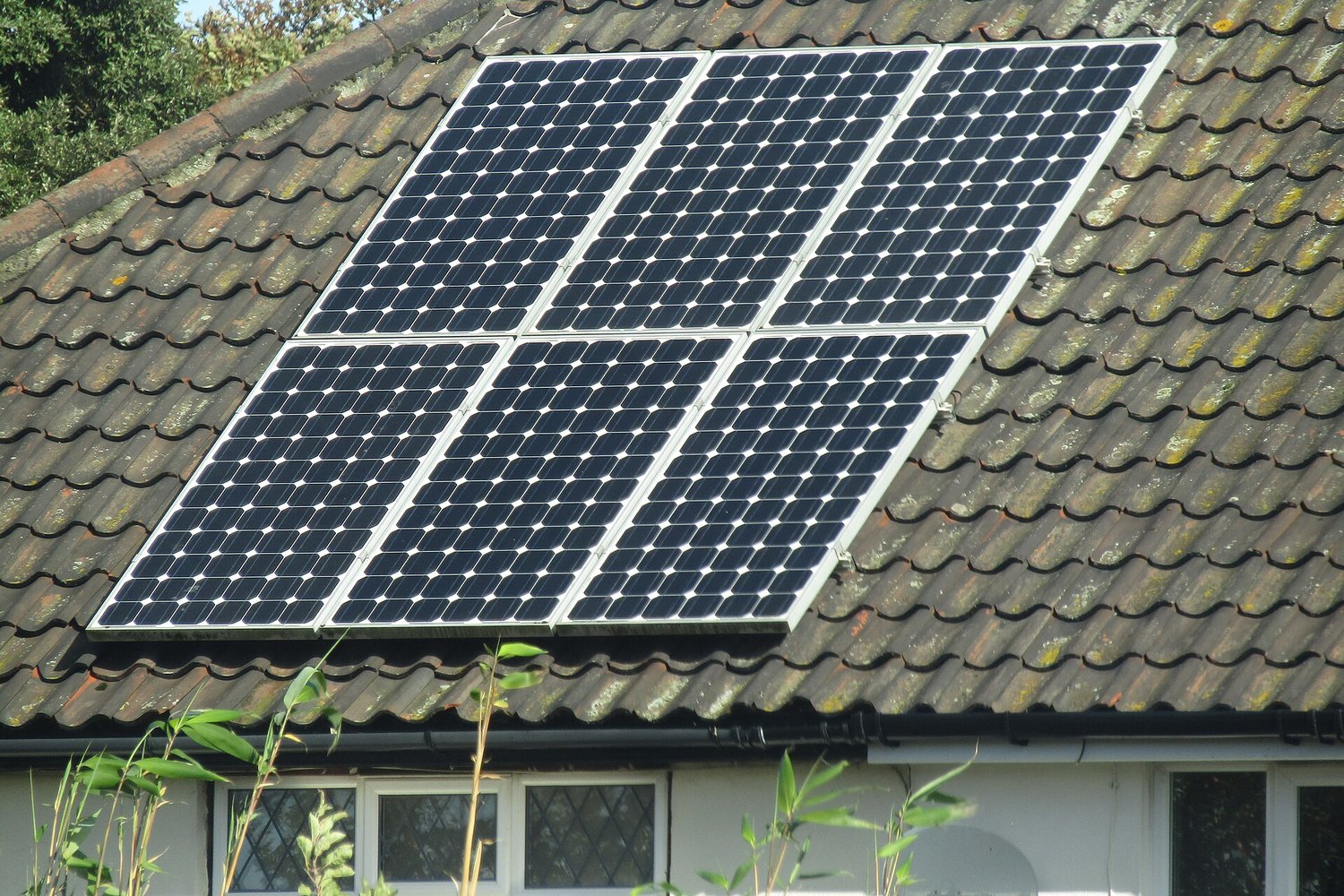
Picture a summer afternoon. The grid drops, the whole street loses power, and you glance at your roof full of panels feeling smug. Then you check the house. Nothing. The fridge is silent, the router lights are dead, and your solar is producing exactly as much power as your neighbor's bare shingles. People find this genuinely hard to believe, and I understand why. You paid for a power plant on your roof, the sun is out, and it does nothing in the one moment you assumed it would carry you.
The reason is a safety feature called anti-islanding. A standard grid-tied inverter is built to sense when the utility goes down and shut itself off within a fraction of a second. If it kept pushing power, it would energize the lines outside your house, and a crew working to restore service could be hurt by current coming from your roof instead of the substation. So the inverter disconnects. Your panels are fine, the wiring is fine, but the system parks itself the instant it loses the grid as a reference. This is not a defect or a cheap component. It is the design, and it is the same on nearly every grid-tied system sold without storage (DOE).
That is the surprise at the center of this whole topic. Grid-tied solar and backup power are two different purchases that happen to involve the same roof. One lowers your bill. The other keeps the lights on. Buying the first does not get you the second, and the gap between them is a battery.
What a real backup setup actually requires
Keeping power during an outage takes more than a panel upgrade. You need three pieces working together, and missing any one of them leaves you dark.
First is a battery to hold energy, because the grid can no longer act as your storage the way it does when net metering is running. Second is an inverter that can form its own grid, often called an islanding or backup-capable inverter, so it can create the stable voltage and frequency your appliances expect without the utility there to set the beat. Third is a transfer setup, usually an automatic transfer switch or a smart panel, that physically cuts your home off from the utility lines during the outage. That isolation is what makes it safe for your solar to keep running while the street is down, and it is what satisfies the same anti-islanding rule that shut a grid-tied system off in the first place.
The U.S. Department of Energy explains in its homeowner guidance that a standard grid-connected solar system is designed to shut down during a utility outage so it does not feed power onto lines that crews may be repairing, and that keeping a home powered through an outage requires adding battery storage along with the equipment to isolate the home and run on that stored energy.
U.S. Department of Energy, Homeowner's Guide to Going Solar
Once those three pieces are in place, the sequence during an outage is quick and quiet. The grid fails, the transfer switch isolates your home, the backup inverter forms its own grid, and your protected circuits come back within seconds. During daylight, the panels wake back up and feed the house and recharge the battery at the same time. That recharge is the part a generator cannot match, and it is why a modest battery can outlast a much bigger fuel tank in the right weather.
Whole-home backup versus critical-loads backup
Here is where most homeowners overspend or underplan, so it is worth slowing down. Backup is not all or nothing. You choose how much of the house stays alive, and that single choice drives most of the cost.
Critical-loads backup, sometimes called partial backup, protects a chosen set of circuits. An electrician moves those circuits onto a separate subpanel, and only that subpanel runs off the battery during an outage. You pick what goes on it: the fridge, some lights, the internet, a medical device, maybe the furnace fan. Everything else stays dark until the grid returns. Because the battery only ever has to carry that short list, it can be small, and small is cheap.
Whole-home backup keeps most or all of the house running, including the loads people assume they cannot live without. The trouble is that two of those loads, central air conditioning and electric heat, draw enormous power, and an electric range or a well pump can spike hard when they start. Backing all of that up means stacking multiple battery units and installing a larger inverter capable of the surge. The jump in price from partial to whole-home is steep, and it catches people off guard because the brochure made both sound like a checkbox.
The honest guidance after seeing a lot of these installs is to start from the loads, not the label. Very few homes actually need central air during a blackout. Most need the fridge to stay cold, the phones charged, the medical gear running, and the house warm enough. That is a critical-loads job, and it costs a fraction of whole-home coverage.
How long a battery actually lasts in a blackout
This is the question everyone asks, and the honest answer is that there is no single number. Runtime is just the usable energy in the battery divided by how fast your backed-up loads draw it, and both sides of that math are yours to set. Anyone who quotes you a flat "it lasts X hours" without knowing your loads is guessing.
Think of it in rough terms. A battery holds a certain number of kilowatt-hours. Your backed-up loads draw a certain number of kilowatts at any moment. A fridge, a handful of LED lights, a router, and a laptop might pull a few hundred watts on average over a night. A battery sized for essentials can carry that kind of load for many hours, and sometimes through the night, which is why critical-loads backup feels so much more generous than its size suggests. Add central air, and the same battery might empty in an hour or two, because the draw jumped by a factor of ten. These are estimates, not guarantees, and your real runtime depends on your exact appliances and how carefully you ration during the outage.
Then there is the sun. If the outage happens on long, clear summer days, your panels refill the battery every afternoon, so a small unit can stretch across several days as long as you are not asking it to power the whole house. Winter is the opposite. Short days and heavy cloud mean far less recharge, and production falls as the weather turns, so a battery that felt bottomless in July can tap out by morning in January (DOE). If resilience is the reason you are buying, plan around the worst week of your year, not the average day.
Sizing backup to what actually matters
The way to get this right is to make a list before you shop, not after. Walk the house and write down what truly has to keep running when the power is out, then roughly how much each one draws and for how long. That list is the entire basis for sizing the battery, and it keeps a salesperson from sizing it for you.
For most families the real must-haves are short. A refrigerator and freezer so the food survives. Enough lighting to move around safely. Internet and phone charging, which matter more than people admit, because that is how you learn when the grid is coming back and how you reach help. Any medical equipment, from a CPAP to an oxygen concentrator to insulin that needs refrigeration. If you are on a well, the pump, because no grid means no water. Heat in a cold climate, which usually means the furnace blower or a heat pump rather than resistance heat.
Notice what is missing from that list. The dryer, the oven, the second TV, and central air are comfort, not survival, and backing them up is where budgets balloon. The discipline of writing the real list first is what separates a sensible critical-loads system from an oversized whole-home one you did not need. Consumer Reports makes the same point in a different way, urging buyers to compare full installed quotes against their actual needs rather than reaching for the biggest option on the sheet (Consumer Reports).
Comparing the common backup setups side by side
It helps to see the choices laid out together, because the words blur once a salesperson starts talking. The table below compares how each setup behaves when the grid fails, what drives its cost, and roughly how long it carries you. Treat the runtime column as an estimate tied to the loads you back up, not a promise.
| Setup | What happens during an outage | Main cost driver | Rough runtime | Best for |
|---|---|---|---|---|
| Grid-tied, no battery | Inverter shuts off within a second (anti-islanding), and the house goes dark | None beyond the array | Zero during the outage | Reliable grid, bill savings only |
| Battery plus critical-loads panel | Protected circuits island and come back in seconds | One small battery plus a subpanel | Many hours to overnight for essentials (estimate) | Short, occasional outages |
| Battery plus whole-home backup | Most or all circuits stay live, including big loads | Multiple batteries plus a larger inverter | Shorter per kWh because the load is bigger (estimate) | All-electric homes, frequent outages |
| Solar plus battery with daytime recharge | Home islands and panels refill the battery by day | Battery and inverter plus adequate array | Can stretch for days in sunny weather (estimate) | Long, multi-day outage risk |
| Portable power station | Powers a few plug-in devices you move to it | Small standalone unit | Hours for small loads (estimate) | Phones, a lamp, a CPAP in a pinch |
| Fuel generator (for contrast) | Runs once started, no automatic solar recharge | The unit plus ongoing fuel | Limited by fuel on hand | People who want a non-solar option |
The row that matters most for this article is the first one, because it is the one people do not expect. Everything below it is a way of buying your way out of that zero.
The well pump, the medical device, and other quiet power hogs
A few specific loads deserve their own warning, because they break more backup plans than anything else. The first is the well pump. On many rural properties, losing the grid means losing water, not just power, and a well pump is a motor that draws a hard spike of current the moment it starts. That surge can be several times its running draw, so your inverter has to be rated for the startup, not just the steady load. Size only for the running watts and the pump may refuse to start when the battery is doing its job.
Medical equipment is the second, and it changes the stakes entirely. If someone in the house depends on an oxygen concentrator, a CPAP, a dialysis setup, or refrigerated medication, backup stops being a comfort and becomes a safety requirement. These loads are usually modest in wattage, which is good news, but they cannot be allowed to fail, so they belong on the protected subpanel first and the battery should be sized with real headroom above them. Never let the medical load be the thing that runs the battery flat because the dryer was also connected.
The third trap is anything with a big motor or a heating element. Central air, electric water heaters, electric ranges, and resistance heat all pull far more than the lights and electronics people picture when they imagine a blackout. Put one of them on the backup panel by accident and your overnight runtime estimate collapses. This is exactly why the load list has to come first, and why the cheapest honest backup usually leaves the biggest appliances off the protected circuits on purpose.
How the 30% credit changes the battery math
Storage is the expensive part of backup, so the federal incentive matters a lot. A battery with a capacity of at least 3 kWh qualifies for the 30% Residential Clean Energy Credit, the same credit that applies to the panels themselves (IRS). That lowers the real cost of the one component standing between you and a dark house.
What surprises people most is that the credit applies to storage on its own, not only to batteries bought at the same time as a new array. ENERGY STAR confirms that battery storage technology rated 3 kWh or more counts toward the credit, which means you are not penalized for waiting (ENERGY STAR). If you installed grid-tied panels a few years ago and only now realize they will not carry you through an outage, you can add a backup battery later and still claim 30% of its cost.
Keep the economics honest, though. The credit reduces the price, but a battery bought purely for backup rarely pays for itself through bill savings alone, because average U.S. residential power runs only around 16 to 17 cents per kWh and a backup battery spends most of the year idle (EIA). You are buying resilience, and the credit is what makes that resilience affordable rather than a thing that eventually turns a profit. Weigh it as insurance against outages you actually expect, and the 30% is the difference between a hard yes and a maybe.
A checklist for sizing your backup
Run through this before you sign anything. The goal is to walk into the quote with your own load list already written, so the system gets sized to your house instead of to the upsell.
- Have you listed the exact circuits you need during an outage, from the fridge to the router to any medical gear?
- Did you estimate how many watts each one draws and how many hours overnight you need them running?
- Does anyone in the home depend on medical equipment that cannot be allowed to lose power?
- Are you on a well, and if so is the inverter rated for the pump's startup surge, not just its running draw?
- Have you decided honestly whether you need central air or electric heat during a blackout, or whether those can stay off?
- Does your plan include an islanding-capable inverter and a transfer switch or smart panel, not just a battery?
- Will the battery hold at least 3 kWh so it qualifies for the 30% federal credit?
- Did you ask how the panels recharge the battery during a multi-day outage, and what happens on cloudy winter days?
Backup assumptions that burn people
The same mistakes repeat, and most of them trace back to assumptions nobody corrected before the money was spent. Here are the ones that cost real homeowners the most.
The first is assuming grid-tied panels alone will power the house in an outage. This is the big one, and people only discover it during the first blackout after install, standing in a dark kitchen under a sunny roof. If you take nothing else from this piece, take that panels without a battery produce nothing when the grid is down.
The second is oversizing to whole-home backup out of fear. Homeowners picture losing everything and buy coverage for central air and the whole panel, then pay for multiple batteries and a bigger inverter they rarely use at full tilt. A critical-loads setup would have carried their real needs for a fraction of the price. Fear sells capacity you do not need.
The third is the opposite error, underplanning the backup loads. People put the well pump and a medical device on the protected circuits, then leave the dryer or a space heater connected too, and the battery drains hours sooner than they expected. Map the loads before the install, not during the next outage.
A few more worth naming. Treating a backup battery as a money-saver and feeling cheated when the bill math is weak, which it usually is for a backup-only unit (EIA). Forgetting that production and recharge drop in winter, so a summer runtime estimate misleads you in the season outages often strike (DOE). And assuming you cannot add storage later, when in fact a battery of 3 kWh or more added to an existing system still earns the full 30% credit (IRS). Comparing full installed quotes rather than headline equipment prices catches most of the rest, since labor and the electrical work move the total a lot (Consumer Reports).
Getting your backup sized right
Backup is a sizing problem dressed up as a yes-or-no question. The yes-or-no part is easy: if you want power during an outage, you need a battery and the switching to go with it. The hard part is matching the battery to the loads that actually matter for your home, so you neither pay for whole-home coverage you will not use nor undersize the thing you bought it for. That is where a modeled proposal beats a brochure.
Enact's free homeowner proposal models solar plus battery backup sizing against your real loads, so you can see what a critical-loads setup covers versus whole-home before you commit to either (Enact). Instead of guessing at runtime, you get an estimate tied to the circuits you choose to protect and the array feeding them, which is the only way to size this honestly. For the equipment side, Enact's residential solar tools help plan the system around backup from the start, rather than bolting storage onto a design that never accounted for it (Enact residential solar).
Once the system is live, the Enact Home app lets you watch battery charge and household use in real time, so during an actual outage you can see exactly how much runtime you have left and ration the big loads before the battery runs flat. Decide with your own load list and your own roof's numbers, and the question at the top of this article stops being a nasty surprise and becomes a setting you chose on purpose.
Frequently asked questions
Does solar work during a power outage?
No, not on its own. A standard grid-tied solar system shuts off within a second when the grid fails, a safety feature called anti-islanding that protects utility crews working on the lines (DOE). To keep power during an outage you need a battery plus an inverter and switching that let the home island and run on stored energy.
How long will a solar battery last in a blackout?
It depends entirely on the battery's kWh and the loads you back up, so there is no single number. A battery sized for essentials like a fridge, lights, and internet can often run many hours or overnight, while adding central air can empty the same battery in an hour or two (estimates, not guarantees). On sunny days the panels recharge it, which can stretch runtime for days, though winter weather cuts that recharge sharply (DOE).
What is the difference between whole-home and critical-loads backup?
Critical-loads backup protects a chosen set of circuits on a separate subpanel, like the fridge, some lights, and a medical device, which keeps the battery small and the cost low. Whole-home backup keeps most or all circuits running, including heavy loads like air conditioning, which means stacking batteries and a larger inverter and a much higher price. Most families only need a critical-loads setup (Consumer Reports).
Can I add a battery for backup to my existing solar panels?
Yes. You can add a backup battery to an existing grid-tied system, and a battery rated 3 kWh or more still earns the 30% federal Residential Clean Energy Credit even when added years after the panels (IRS). The main questions are inverter compatibility and whether you need a critical-loads subpanel to isolate the circuits you want to protect.
Does a backup battery qualify for the federal tax credit?
Yes. Battery storage with a capacity of at least 3 kWh qualifies for the 30% Residential Clean Energy Credit, and ENERGY STAR confirms the credit applies to storage on its own, not only when bought with new panels (ENERGY STAR). That lowers the real cost of the one component that makes backup possible.
Is a backup battery worth it if I just want to save money?
Usually not for savings alone. A battery bought mainly for outage protection sits idle most of the year, and with average U.S. power around 16 to 17 cents per kWh the bill savings rarely cover its cost quickly (EIA). Buy backup for resilience against outages you actually expect, and treat the 30% credit as the thing that makes that resilience affordable (IRS).
Sources
See your real numbers
Enact builds proposals from your actual roof and utility data — so the savings you see are the savings you get. Get a free, no-pressure design.
Get a Free Solar Proposal