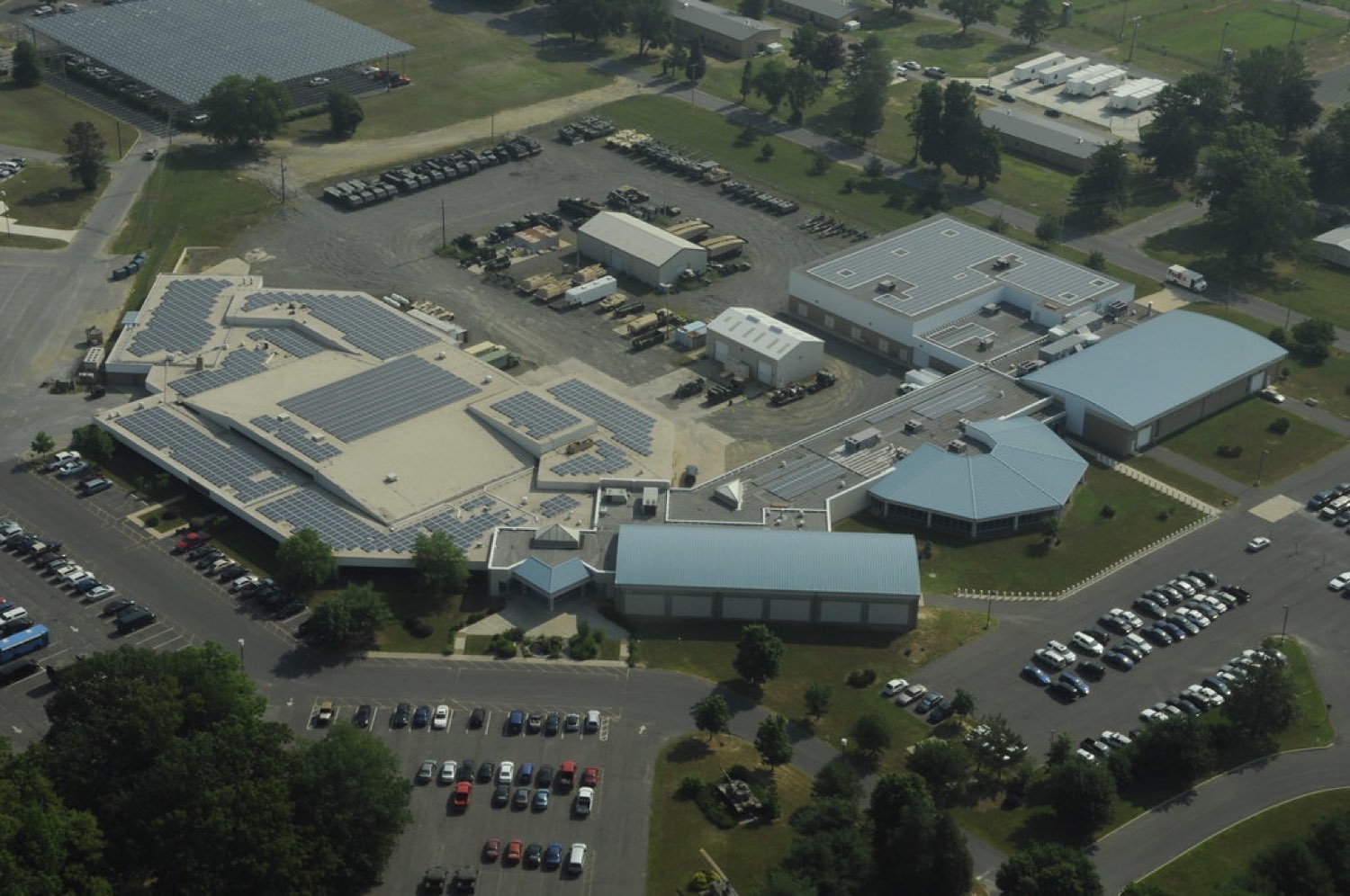

Virtual net metering (VNEM) lets a single solar array on one roof send credits to several electric meters in the same building, so the power from a shared system can offset the bills on common-area meters and individual tenant units at once. Multifamily solar is harder than home solar because the property has one roof but many separate utility accounts, and the owner has to decide which meters the system feeds and how credits get split. These allocation rules are set by each state and utility and differ widely, so confirm your own program before you model a single number.
Key takeaways
- A multifamily property has one roof but many meters, so the central question is which meters the solar feeds and who receives the credit, not just how many panels fit.
- Virtual or aggregated net metering, where a state allows it, splits one array's output across multiple accounts on the same property, including tenant units and common-area meters.
- Net-metering and net-billing mechanics are set by each state and utility. California under the CPUC is one named example, not a rule that applies everywhere.
- A common-area-only system is the simplest path and benefits the owner directly, while VNEM is what reaches tenant meters but adds allocation and billing work.
- All credit-split and savings figures should be treated as model outputs tied to your specific utility program, not guarantees.
- Why one roof and many meters changes the math
- What virtual net metering actually means
- Master-metered and individually metered buildings
- How solar credits get allocated to units
- Who benefits, the owner or the tenants
- The common-area-only system and when it is enough
- Three ways to put solar on a multifamily property
- How tenant billing actually works
- Why the rules change at every state line
- Evaluating solar for a multifamily property
- Multifamily solar missteps
- Model the building before you commit
A single-family home has one roof, one meter, and one bill. Solar there is a closed loop. The panels feed the house, the meter nets the flow, and the savings land with the person who paid for the system. A multifamily property breaks that tidy picture. There is still one roof, but underneath it the building may carry a dozen or a hundred electric meters, one for each apartment plus separate accounts for hallway lighting, elevators, water pumps, the laundry room, and the parking garage. The utility treats every meter as its own customer. That one fact is why putting solar on an apartment building is a different problem than putting it on a house, and why the first thing an owner has to understand is not panels at all. It is metering.
Why one roof and many meters changes the math
When a system sits on a multifamily roof, the physical array is simple. The complication is accounting. A rooftop array produces one stream of kilowatt-hours, but the building has many meters that could receive the benefit, and each meter belongs to a different payer. In most buildings the owner pays the common-area bills and each tenant pays their own unit meter. So the power the array makes has to be assigned somewhere, and whoever's meter it offsets is the party who saves money.
This matters because of the split-incentive problem that runs through almost every energy upgrade in rental housing. The owner controls the roof and the capital. The tenants pay most of the electricity. A plain rooftop system wired to a single meter only reduces that meter's bill, which means the owner can spend the money and watch the savings flow to a meter they do not pay, or keep the savings and leave the tenants untouched. Retail electricity prices have climbed over the past decade, and the U.S. Energy Information Administration describes how rates reflect fuel costs, grid investment, and regional supply and demand, so the dollars at stake are real and growing. The metering choice decides where those dollars go.
Solving the split incentive is the whole reason virtual net metering exists. It is a way to take one array's output and route credits to more than one meter, so an owner can reach tenant bills without running a separate physical system for each unit.
What virtual net metering actually means
Ordinary net metering works at a single meter. Your panels send surplus power to the grid, the meter records it, and you get a credit on that same account. Virtual net metering, sometimes called aggregated net metering, loosens the one-meter rule. It lets the output of a single generation source be credited across several designated meters on the same property, even though those meters belong to different accounts and none of them is physically wired to the panels.
The word virtual is the key. No wire runs from the array to apartment 4B. Instead, the utility assigns a share of the system's monthly production to that unit's meter as a billing credit, following an allocation the owner set up in advance. The electrons still flow out to the grid and back the ordinary way. What is virtual is the credit, which moves on the utility's books rather than through copper.
That design is what makes shared solar workable in a building full of separate tenants. One array, one interconnection, one maintenance contract, and the benefit spreads across the meters the owner chooses. Programs that allow this typically require that all the meters sit behind the same property or service delivery point, and they define exactly which meter types qualify. The DOE's guide to going solar covers shared and community arrangements as one of the paths available when a single owner-occupied roof is not the whole story.
Master-metered and individually metered buildings
Before any of the credit mechanics apply, you need to know how your building is metered today, because that shapes every option. Multifamily properties fall into two broad camps.
A master-metered building has one main utility meter for the whole property. The owner receives a single bill for everything and recovers the cost from tenants through rent or a submetering arrangement. Older buildings and many smaller properties work this way. For solar, a master meter is the simplest case, because an array wired to that one meter offsets the building's entire load, and there is no need to split credits across separate utility accounts at all. The split happens inside the owner's own books.
An individually metered building gives each apartment its own utility account and its own bill, with a few extra meters for the common areas the owner pays. This is the more common setup in newer and larger properties, and it is the hard case for solar. An array can only be wired to one meter, so without virtual net metering the system can offset the common-area meters or one unit, but not the tenant units as a group. Virtual net metering is the tool that was built for exactly this building, letting one array reach many individual tenant meters through allocated credits.
So the metering layout is not a detail to confirm later. It determines whether you even need VNEM, or whether a straightforward single-meter system already does the job.
How solar credits get allocated to units
Where a program allows virtual net metering, the owner designates which meters participate and what fraction of the array's output each one receives. The allocation is usually expressed as a set of percentages that add up to the whole system, and it is filed with the utility when the system is interconnected. Each billing cycle, the utility multiplies the total production by each meter's percentage and posts that share as a credit against the unit's usage.
How you set those percentages is a real decision with winners and losers. An owner might weight the allocation toward the common-area meters they pay directly, capturing the savings for the property. Another might push most of the credit to tenant units as an amenity that supports higher rents or lower turnover. A third might match each unit's share to its square footage or its historical consumption so the benefit feels fair across the building. Programs often cap how and when allocations can change, so the plan you file is not something you can retune every month on a whim.
The value of each credited kilowatt-hour depends on the underlying tariff, and that is where the mechanics get local. Under older retail-rate net metering, a credited kilowatt-hour was worth close to the retail price the meter would otherwise pay. Under newer net-billing structures, exported energy is valued lower and varies by hour, which changes how much a given allocation is actually worth. The EIA publishes average retail electricity prices by sector and state, which gives a grounded starting point for estimating what an offset kilowatt-hour saves in your area before you model the specific tariff.
Who benefits, the owner or the tenants
This is the question that decides whether a multifamily solar project makes sense for you, and the honest answer is that it depends on who you point the credits at. The capital comes from the owner either way. The savings can be steered.
When credits flow to the common-area meters, the owner captures the benefit directly as lower operating costs on the bills they already pay. That improves net operating income, and for an owner focused on the property's financials, it is the cleanest case. The tenants see nothing change on their own bills, which is fine if the solar was never pitched as a tenant perk.
When credits flow to tenant meters through VNEM, the tenants see lower electricity bills, and the owner's direct savings shrink. The owner's return then comes indirectly through stronger leasing, reduced vacancy, or the ability to market the building as lower-cost to occupy. That return is real but harder to put a precise number on, and it depends on your local rental market. Some affordable-housing programs are built specifically around passing solar savings to residents, with allocation rules written to protect that benefit. The SEIA keeps industry research data on how different market segments, including community and multifamily solar, have grown as these models matured.
There is no universal right answer here. A market-rate owner optimizing cash flow and an affordable-housing operator with a mandate to lower resident costs will set up the same building very differently, and both can be correct for their goals.
The common-area-only system and when it is enough
Not every multifamily building needs virtual net metering, and reaching for it when a simpler design would do is a common way to overbuild a project. The alternative is a common-area-only system, an array sized to the meters the owner already pays: lighting, elevators, pumps, ventilation, laundry, and any shared electric load.
The appeal is that it sidesteps the hard parts. There is no credit allocation to negotiate, no tenant billing to manage, and no dependence on a VNEM program that your state may or may not offer. The system wires to the common-area meter the ordinary way, and the savings land with the owner from day one. For a building where common-area load is substantial, which is typical in properties with elevators, garage ventilation, or large shared laundry, this can absorb a surprisingly large array and deliver a clean payback.
The limit is equally clear. A common-area-only system does nothing for tenant bills, so if the goal is to lower residents' costs or market the building on energy savings, it falls short. The right call comes down to the goal. An owner who wants operating-cost relief and simplicity often does best with a common-area system, while an owner who wants to reach residents needs the virtual net metering path and should confirm the program exists before planning around it. Many properties end up combining the two, with a common-area system as the base and VNEM layered on where it is available and the numbers support it.
Three ways to put solar on a multifamily property
The table below frames the main approaches side by side. Which one fits depends on how your building is metered, what your state allows, and whether your goal is owner savings or tenant savings. Treat it as a map of the trade-offs, not a recommendation of one path.
| Approach | Who gets the credit | Tenant billing work | Depends on state VNEM? | Best fit |
|---|---|---|---|---|
| Common-area-only system | The owner, on shared-load meters | None | No | Owners wanting operating-cost relief and the simplest setup |
| Master-meter whole-building system | The owner, across the full building load | Handled inside the owner's own rent or submetering | No | Master-metered buildings with one main account |
| Virtual net metering (VNEM) | Allocated across tenant and common meters | Credits flow through the utility to each account | Yes | Individually metered buildings reaching tenant bills |
| Individual per-unit systems | Each unit's own meter, one array each | None, each is a standalone account | No | Townhome-style buildings with separate roofs per unit |
| Third-party-owned or PPA | The developer owns it, building buys the output | Varies by contract | Sometimes | Owners wanting no upfront cost or no tax appetite |
The pattern worth reading out of the table is that only the VNEM row and the third-party row reliably reach individual tenant meters, and both carry more program dependence and more administration than a plain owner-side system. Simpler is cheaper to run. More reach costs more to set up.
How tenant billing actually works
When people ask how solar billing works for tenants, they usually picture the owner sending each resident a separate solar invoice. In a properly structured virtual net metering program, that is not how it goes. The credit appears on the tenant's normal utility bill. The utility applies the unit's allocated share of production against its usage, and the tenant sees a lower amount due from the same company that always billed them. No new bill, no new payment relationship.
That clean version depends on the program supporting it. In some arrangements, especially where a building is master-metered and the owner submeters units internally, the owner or a billing contractor does calculate and pass through each unit's share, and then the mechanics and the legal requirements get more involved. Submetering and the right to bill tenants for electricity are themselves regulated, and the rules differ by state and sometimes by city, which is one more reason the building's existing metering structure drives the design.
For a tenant, the practical questions are whether the credit is automatic, whether it is guaranteed or varies with production, and what happens when they move out. For an owner, the question is how much billing machinery the chosen structure forces onto the property. A utility-administered VNEM credit is close to zero ongoing work. An owner-run submetering pass-through is a recurring operational task that needs accurate metering and clear lease language. Neither is wrong, but they are not the same amount of effort, and pricing the project without accounting for that effort is a mistake.
Why the rules change at every state line
Everything above describes how virtual net metering works in concept. Whether it is available to you, and on what terms, is decided entirely by your state and your utility. There is no national virtual net metering rule. Some states offer well-developed VNEM or aggregated-metering programs, some restrict them to specific customer classes like affordable housing or agriculture, and some do not offer them at all. The credit value, the eligible meters, the allocation rules, and the caps all live in state and utility tariffs.
California is a useful named example of how specific the mechanics get. Under the state's Net Billing Tariff, administered by the California Public Utilities Commission, exported energy is valued at time-varying avoided-cost rates rather than the old retail rate, which changes how much a credited kilowatt-hour is worth hour by hour.
The California Public Utilities Commission explains that its Net Billing Tariff values the energy a customer sends to the grid based on what that energy is worth to the grid at the time it is exported, replacing the earlier approach of crediting exports at the full retail rate.
California Public Utilities Commission, Net Billing Tariff
That is California. Your state may run on retail-rate net metering, a different net-billing formula, or a dedicated multifamily program with its own allocation math. The CPUC's broader net metering materials show how much detail sits behind a single state's rules, which is a fair warning about assuming your own state works the same way. The one safe instruction for every reader is to confirm the current program with your own utility and state regulator before you plan a system or promise savings to anyone.
Evaluating solar for a multifamily property
Work through this before you commit capital or sign a contract. A gap here is usually what turns a promising project into a stalled one.
- Document exactly how the building is metered today, master versus individual, and list every common-area meter the owner pays.
- Confirm with your state and utility whether virtual or aggregated net metering is available to your building type, and get the current tariff terms in writing.
- Decide the goal up front, whether that is owner operating-cost savings, lower tenant bills, or a marketable building amenity.
- Pull a full year of usage for the meters you intend to offset, not a single month, so the array is sized to real load.
- If VNEM applies, draft the credit allocation and check how often the program lets you change it later.
- Price the billing and administration work the chosen structure creates, including any submetering or lease changes.
- Model the credit value on your actual tariff, not a national average, since export value varies widely by program.
- Treat every savings and credit-split figure as a model output tied to stated assumptions, not a guaranteed return.
Multifamily solar missteps
The projects that disappoint tend to go wrong in the same recognizable ways. Each one is avoidable with earlier homework.
Assuming VNEM exists before checking. Owners sometimes design a whole tenant-benefit plan around virtual net metering, then discover their state or utility does not offer it. Confirm the program first, because it is the hinge the entire design hangs on.
Ignoring the split incentive. Wiring a system to one meter without deciding who should save money leaves the owner paying for panels that offset a bill they do not pay, or the reverse. The metering choice is the strategy, and skipping it wastes the investment.
Reaching for VNEM when common-area-only would do. If the goal is operating-cost relief, the allocation and billing complexity of virtual net metering can be overhead with no added benefit. Match the structure to the goal rather than the other way around.
Sizing to the roof instead of the load. A big array that produces far more than the credited meters can absorb pushes surplus out at low export value, which drags the payback. Size to the usage you are offsetting.
Underpricing the billing work. An owner-run submetering pass-through is a recurring operational cost that quietly eats into the project's returns when it is left out of the model.
Promising tenant savings as a fixed number. Allocated credits move with production and with a time-varying tariff, so a guarantee written into a lease or a marketing flyer can become a problem the owner cannot keep.
Model the building before you commit
The thread running through every section here is that a multifamily solar decision is a metering and allocation decision first, and a panel decision second. The hard part is not the roof. It is figuring out which meters the system feeds, what the credits are worth under your specific tariff, and how the savings split between owner and tenants, all before anyone signs.
That modeling is exactly where a purpose-built platform earns its place. Running credit allocations and payback by hand across a dozen meters and a time-varying tariff is slow and easy to get wrong, and a single mis-set allocation can change who benefits for years. Enact's commercial solar tools combine energy analysis with financial modeling for multi-meter properties, so an owner can test a common-area-only design against a VNEM allocation and see the difference in the numbers rather than guessing. For the teams building these proposals, Enact's design and proposal platform turns a building's metering layout and usage into a proposal that shows the credit split and the payback clearly, on every deal. Model the building honestly, confirm your state's program, and let the metering math drive the system, and a multifamily roof becomes an asset that works for the people you intend it to.
Frequently asked questions
What is virtual net metering?
Virtual net metering (VNEM) lets the output of one solar array be credited across several electric meters on the same property, even though those meters belong to different accounts and none is physically wired to the panels. The utility assigns each meter a share of the system's production as a billing credit, following an allocation set up in advance. Availability and terms are set by each state and utility, so one state's program, such as California's under the CPUC, does not describe them all.
Can apartment buildings get solar?
Yes, and there are several ways to do it depending on how the building is metered. A master-metered building can use one array on its single main meter, while an individually metered building typically needs virtual net metering to reach tenant units, or a common-area-only system to cover shared loads. The DOE's guide to going solar covers shared and multi-tenant arrangements alongside single-roof systems.
How does solar billing work for tenants?
In a well-structured virtual net metering program, the solar credit appears directly on the tenant's normal utility bill, lowering the amount due without any separate solar invoice. In master-metered buildings with internal submetering, the owner or a billing contractor may instead calculate and pass through each unit's share, which adds administrative work and is itself regulated. Because retail rates drive how much each credited kilowatt-hour saves, the EIA's average electricity prices by state are a useful baseline.
Who gets the savings from multifamily solar, the owner or the tenants?
Whoever the credits are allocated to. Point credits at common-area meters and the owner captures the savings as lower operating costs, while allocating credits to tenant meters through VNEM lowers residents' bills and gives the owner an indirect return through leasing and retention. The SEIA industry research data tracks how community and multifamily models have grown as these allocation structures matured.
Do I need virtual net metering, or is a common-area system enough?
If your goal is lowering the owner's operating costs, a common-area-only system is often enough and far simpler, with no credit allocation or tenant billing to manage. VNEM is the tool you need when the goal is reaching individual tenant meters in a building where each unit has its own account. The DOE's Solar Energy Technologies Office describes how system design follows the ownership and usage situation rather than one default.
Does virtual net metering exist in every state?
No. Virtual and aggregated net metering are set by each state and utility, so some offer well-developed programs, some limit them to specific customer classes, and some do not offer them at all. Credit value, eligible meters, and allocation rules all live in local tariffs, as the detail behind California's program at the CPUC shows. Confirm your own utility and state regulator's current rules before planning a system.
Sources
- CPUC - Net Billing Tariff (NEM 3.0)
- CPUC - NEM Revisit
- EIA - Electricity prices and factors affecting prices
- EIA - Average price of electricity (FAQ)
- DOE - Homeowner's Guide to Going Solar
- DOE - Solar Energy Technologies Office
- SEIA - Solar Industry Research Data
- Enact - Commercial solar solutions
- Enact - Design and proposal platform
See your real numbers
Enact builds proposals from your actual roof and utility data — so the savings you see are the savings you get. Get a free, no-pressure design.
Get a Free Solar Proposal